Count calories by voice, free: just say what you ate, in any language.
Tap the microphone and talk normally. Fotocal works out which language you spoke, picks out every food and how much of it, estimates the calories and macros, and files the whole thing under the meal you choose. No typing, no searching, no scrolling a database. Free: 1 voice log a day, no card; Premium makes it unlimited.
Four seconds of talking, nothing else.
The whole point is that you do not have to change how you describe food. Say it the way you would say it to a person.
-
Tap the microphone
It sits in the search bar of every meal, next to the camera and the barcode scanner. Nothing to set up, no wake word, no separate account to connect.
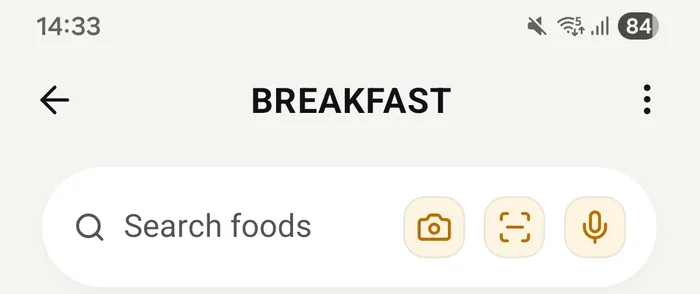
Camera · Barcode · Voice -
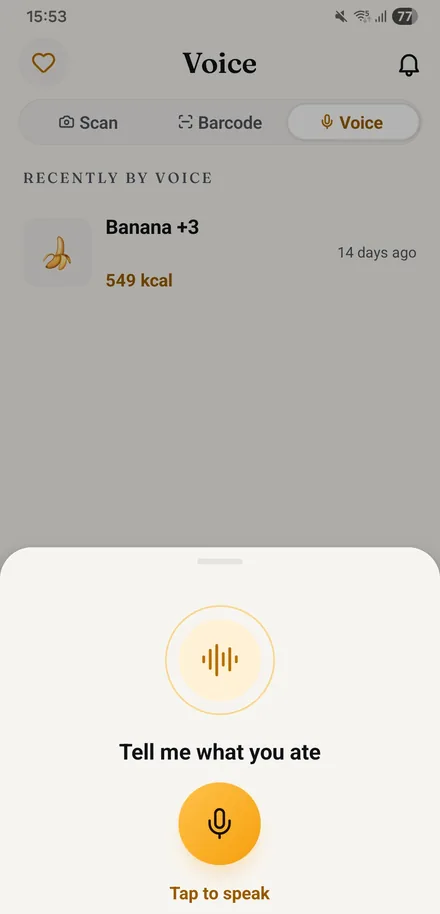
Talk like a person
“Two scrambled eggs, a slice of rye toast and a flat white.” No app grammar, no unit conversions, no picking items off a list. Ordinary sentences are the input format.
-
It works out the language
You never set one first. Speak Spanish today and English tomorrow, or switch mid-sentence because a dish only has a name in one of them — Fotocal works out what it heard and answers in that language.
-
Check it, then send it to a meal
Every food it found, one per line with its calories and macros. Drop anything that is not yours, choose Breakfast, Lunch, Dinner or Snack, and save.
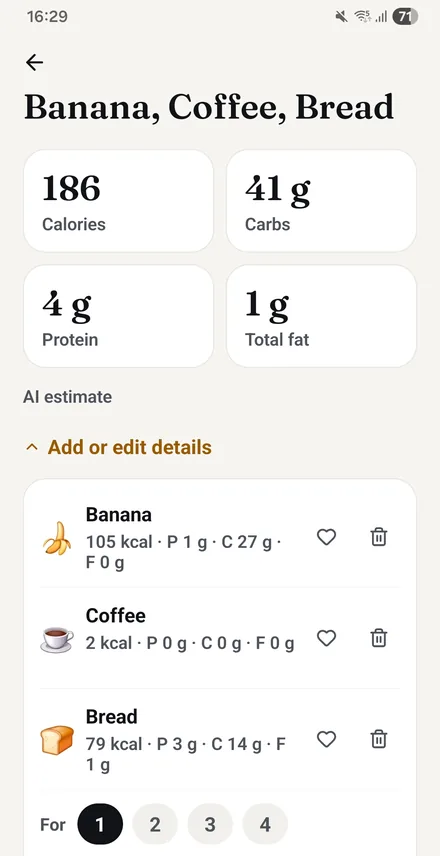
A full entry, not a rough note.
Voice logging produces exactly what a photo scan produces — an itemised meal with real numbers behind it.
-
A check before it is logged
Nothing reaches your diary until you tap the log button. Until then you can drop anything it picked up wrongly, or keep a food as a favourite for next time.
-
Every food, separated
One line per item rather than one lump. “Chicken salad with dressing” comes back as chicken, salad and dressing, each with its own numbers.
-
The amount you said
Say “two eggs” and the entry reads Eggs ×2 — the number you spoke is carried into the item and into the calories behind it.
-
Calories per item and in total
Each food carries its own figure, so you can see which part of the meal actually cost you rather than only the final number.
-
The full macro split
Protein, carbs and fat for the entry, added into the day's rings the moment you save it.
-
Any meal, any time
Breakfast, Lunch, Dinner or Snack — including logging last night's dinner over this morning's coffee.
Hands full, meal logged
Halfway through cooking is exactly when you cannot type. Say what went into the pan and it is recorded — no rinsing your hands first, no picking the phone up twice.
It becomes part of the day, immediately.
A spoken entry is not a second-class one. The moment you save it, it is the same object as a photographed meal, and everything downstream treats it that way.
- Your calories-left figure recalculates on the spot, along with the protein, carb and fat rings.
- Coach Kal can see it. Ask “what should I have for dinner?” and the answer accounts for what you just said you ate.
- It feeds the Recommendations tab, which suggests changes based on where your day is actually short rather than on a generic template.
- It counts toward your Weekly Report, so a week logged by voice is as complete as a week logged by camera.
Questions about voice logging
“Two eggs and toast with avocado”
It detects the language automatically instead of asking you to choose one, so you can speak whichever language the food actually has a name in. That matters more than it sounds — plenty of dishes have no good translation, and describing them in their own language gives a better result than describing them in English.
Do I have to phrase it a particular way?
No. Full sentences, half sentences and lists all work. You do not need to say units, though saying them helps: “200 grams of rice” will always beat “some rice”.
“Half a cup of rice, grilled chicken and a handful of spinach”
Nothing is saved until you tap save. Until then you can remove any food it detected, or mark one as a favourite — and if it got the whole thing wrong, close the sheet and say it again.
Does it need an internet connection?
Yes. Both the transcription and the nutrition estimate happen on our side, so voice logging needs a connection to work.
Keep reading
Short, practical reads that go deeper on tracking without the busywork.
Log your next meal without typing a word.
Fotocal is free to start, with a 5-day free trial on the paid plans.
Get it free On Google Play · Android